Wednesday, April 4, 2012

Texas road trip coming up


The bluebonnets are in bloom and we are hitting West Texas this weekend.  From Monday the 8th to the 16th check back for our updates on all things flora in Texas.  We rented an RV so won't be wasting time searching for motels.  While the winter has been mild it has been long.  It will be good to collect again.

In the meantime see what Daniel has been up to.  He has been foraging and leading foraging Meet Up groups.  We even had a full dinner of all foraged plant foods.  That's the spread in the photo.

Here is a link to Daniel's new blog:

http://beingwherethewildthingsare.blogspot.com/

Wednesday, January 4, 2012

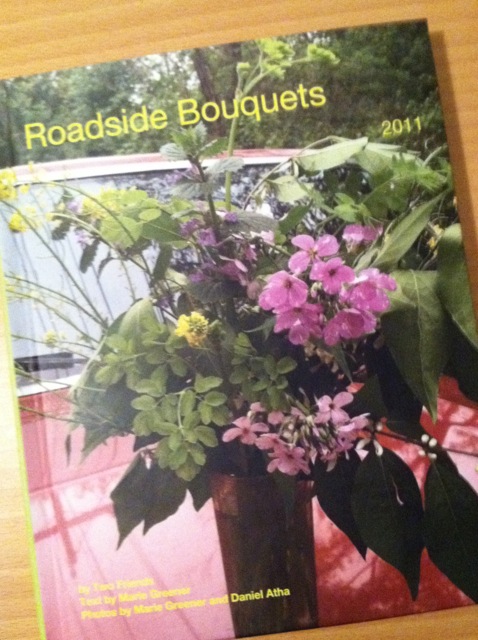
It's all a Blurb now.

Daniel gave me such a great gift for my b-day (the plant presses - see September entry) that I was in a fuddle about what to give him for his b-day in November.  When we returned from the big collecting trip a few friends, and Daniel, suggested that the blog be made into a book so it wouldn't ever be totally lost.  We trust Google, but...

A friend mentioned that there is great blog publishing software on line.  I looked into it.  I did find some that will print your blog but there is little freedom in layout etc. 

Then I found Blurb.  Blurb lets you publish a book so easily it is amazing.  It is a free software program you download to your computer.  It allows you to create a book easily.  I basically just cut and pasted my copy off the blog and drag and dropped the photos from Picasa or from iPhoto.  I resized the photos to make it visually more interesting than the blog.  The three-four month blog translated to a 160 page book.  I was amazed.  When my friend Doris said there was a book in my blog I did not think there was enough content.  Was I wrong.

So this is what it looks like.  I ordered one copy in hardcover.  Softcover would be less expensive.  Blurb recommends that you start with one to make sure it looks the way you envision it.  They are right.  I found so many typos...

I corrected the typos and ordered two more.  A total of three books printed.

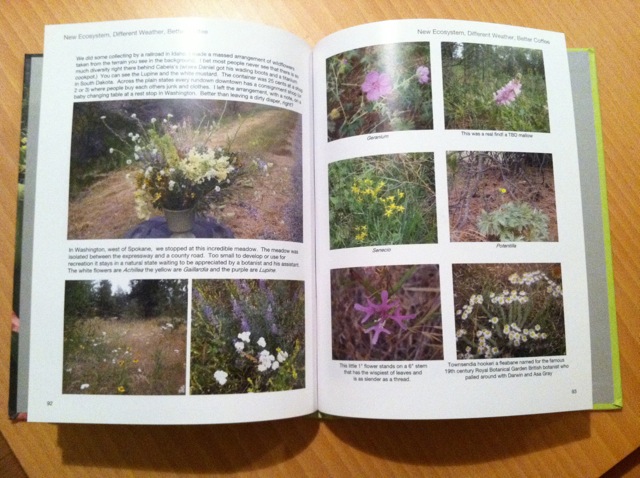
So now there is a permanent record of the trip.  The flora...


And some of the bouquets I made.  I love that there is an option to create two color spreads..for impact! 


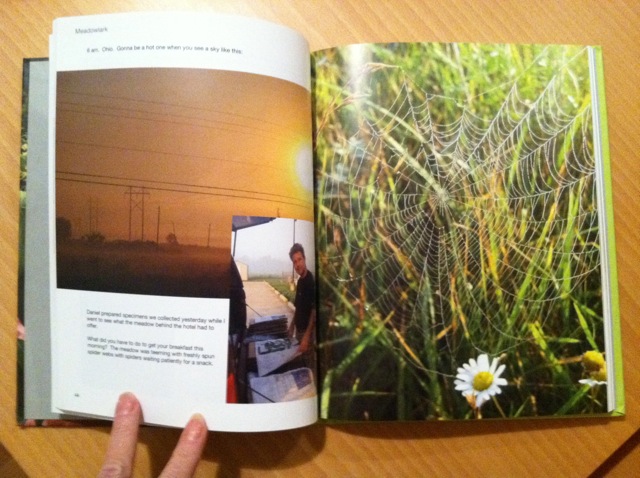
And single page spreads, and images that overlap...
So I am a fan of Blurb.  I think the books were about $75 each.  That's hardcover.  There are ways to save with different paper stock.  I am thinking of scanning family photos and making a Blurb book for my brothers of images from the family albums.  There is so much you can do and it really is easy. Not sure when I will be adding any more to the blog or even if there will be more trips.  But printing a book of the whole experience was very satisfying.  If you want a copy let me know and I'll set it up so you can order it on Blurb with no up-charge.

Wednesday, October 5, 2011

A trip to the herbarium and the mounting room

Yesterday Daniel gave me a look at the progress of some of the specimens we co-collected this year.  Getting from the field to the herbarium is a long process.  We looked at specimens that we collected in Texas in April 2011.  Here are some:

It's interesting to look at specimens after fieldwork since each one triggers a memory of a unique ecosystem.  Many we collected were from Balstrop, TX which you will recall burned this summer.  We guess that many of the trees and flowers we collected were burned in the recent wildfires.  This plant, an Onosmodium helleri is endemic to Travis and surrounding counties of Central Texas.  It was found on a friend's property.  In the herbarium there were only six other specimens of this plant, most from the late 19th Century.  So this was a good addition to the collection.  Thanks Malcolm and Charlie. 


The process of preserving and mounting botany specimens takes months. 

After collecting, pressing and drying them, the specimens were placed in a freezer for three days to kill any bugs.  Bugs are the  enemy of any herbarium - they can devastate a collection.  Then the preliminary in-field identification is verified or corrected which can be an easy task or a time-consuming process involving research in books and/or in the herbarium.  Once identified, a detailed label is created naming the plant genus, family and species, telling the location (State, county, road, GPS coordinates, description of terrain and other relevant information), the dates of collection and identification, the botanist who ID'd the plant, and the collector(s).  In the mounting room it all comes together, the plant specimen, the label and a unique bar code.

Here is one I was happy to see because it made me recall the nearby town, the river and the beautiful cottonwood trees that were filling the air with cotton.  The branches were way too high to reach but luckily there was some recent windfall which yielded a rather lovely specimen:


Pretty isn't it?  I like knowing that it will be in the herbarium in perpetuity for scientists anywhere to access and study. 

Here is how the specimens are mounted before they are stored.

Glue is drizzled in a fine stream all over the back of the specimen.  Then using tweezers it is carefully placed on a sheet of acid free paper.  The label and bar code are affixed, as well as a packet for seeds.  The label always goes in the lower right hand corner.  In the field we try to keep that in mind when cutting and pressing a specimen.  It helps to leave room for the label.  Then the specimen is covered with wax paper over which weights are placed.  These are removed when the glue is dry.


Only then does the specimen get filed.  The herbarium consists of several floors of temperature-controlled sealed rooms full of huge cabinets.  The cabinets are in deep columns.  To enter a stack you have to crank an opening and then walk in to the long row of cabinets.  All flora are arranged by family, then genus and finally by species.  Dates are irrelevant.  In one file folder of cottonwood, for example, there might be specimens from the 1800's mixed with specimens from this year. 


And that is today's herbarium tour.  Any questions? For more on how specimens are pressed and dried see the June 20 entry on A Primer on Preserving Specimens. 


Friday, September 23, 2011

Pressing matters

For my XX birthday, Daniel gave me two presses.  The one on the left is a field press for taking on location.  The one on the right is for drying.  The difference is the outer wooden covers.  The field press is solid, the drying press is lattice.  Otherwise the same.   The straps can be cinched very tight.  It helps to sit on the press while tightening so the closure is very secure and the plants flatten nicely. 


I took the press on a recent trip to California.  I was in Oakland and then Palm Springs.  In Oakland I collected a few specimens.  Here is the first I collected.  My first "number" as botanists say.  I sent a photo to Daniel and he wrote back that it looked like rosinweed or Grindella squarossa.  Was it sticky?  Oh yeah like glue.  He then did a little research and found that while common, it hadn't been recorded as a coastal plant or in Alameda County.  So I was happy that my first number is a country record!

Grindella squarossa
Marie's number 1
 In Palm Springs I collected this from my friend's front yard.  I like specimens like this because they have it all going on -- leaves, flowers and fruit, although you can't see the leaves here.  Daniel tells me this is a Caesalpenia.  

Caesalpenia
 Here is my field book.  It's exactly like the ones Daniel has used for years.  In it I will record every specimen I collect including notes on terrain as well as GPS coordinates.


So I am off to a good start as an amateur botanist.  Thanks Daniel.  This was the best gift ever! 

Monday, August 15, 2011

Does this make my country look ugly?


As we traveled across the US we saw very few wind farms.  We actually expected to see many more, especially in the Plains states where the wind blows virtually unobstructed.  In past travels to California I have seen the massive wind farms outside of Palm Springs.  I always find those windmills to be beautiful, especially when their graceful blades are turning as they nearly always seem to be.  Many communities fight the wind farms saying they are ugly and destroy the viewshed.  Here are some farms we saw.

Washington
Pennsylvania
We also saw many old-fashioned windmills on ranches all over.  Does this windmill improve or detract from the landscape?  Does it evoke any feelings? 


 An old wind mill stands in the shadow of the new wind turbines in a still developing wind farm. 


North Dakota


All across the country, those who have moved from country to town erect little faux windmills in their yards.  What are they trying to recapture?  The romance of the open range?  Maybe it's the beauty of making nature work for us without destroying the planet at the same time.  


Will future generations buy faux wind turbines for their yards?  Will artists paint them as the Dutch did?  Or do wind farms make our country look ugly? 


Thursday, August 11, 2011

The numbers you've been wondering about...plus more from Ptown

...from our coast to coast and back again collecting trip, these just in, drum roll please...

nights in motels                    23
nights camping                      2
lodging costs              1,361.20
miles driven                     7,539
miles driven by Marie            0
breakdowns                           1
accidents/tickets                     0
mishaps on levees                  2
fuel costs                    2,326.37
food costs                      965.26
cheapest motel                 52.08
most exp motel                99.51
bed bugs                                0
arguments/snit fits                  0
and best of all...
specimens collected           724!

...and I would do it again in a heartbeat.

And now, some more roadside floral attractions in Ptown.


This doesn't belong but I just had to include it.  No retouching, this is for real.  No lie.


Sunday, August 7, 2011

Not exactly roadside, but..

...you understand.  These are from a supermarket bouquet.


From the garden...


A lady down the street puts out a little table of cut flowers and a small cooler of herbs with an honor box to pay for them.  Here is $4.00 worth.  (I still owe her 50 cents but I am good for it).


A friend's dreamy chamomile lawn,


And this, just down the street.  We should all love our homes the way these owners do.


Greetings from Provincetown, MA.

Tuesday, August 2, 2011

We made it!

It was an easy fix to the transmission, so that was good. 

The highlight of Warren, PA was a used bookstore.  Then owner had made these wonderful paper sculptures of great authors.  He called the collection Mount Readmore. 


We left Warren, PA and headed home feeling kind of bittersweet.  Collecting was over for the trip.  It was all about getting home.  I'd like to say it was great seeing the GWB at 8:45 last night, but truthfully, I'd be happy staying on the road, camping and collecting for a while longer.  But we both have work to do in NY.

Over the next few weeks we are going to go through photos.  We have a few more stories to share.  And I will be going to the Cape for a while to just chill out.  Daniel will be going to Maine and may blog from there.  As the specimens make their way through the NYBG process of identification, mounting and storing there will be more stories to tell.

And, no doubt, Daniel and I will be back on the road this fall for some weekend collecting trips. So this is a way of saying that the blog is not over, but there won't be daily updates until our next big trip.  We have had more than 1500 page views so that means that you stayed with us through the journey.  Thanks for that -- it made us feel connected to something bigger than where we were at the moment.

The blog has been really fun for us so I know we will keep it going.  Several of you wrote to say the photos are good.  Daniel shares credit for that.  He took many of them.  

So the cris-cross country trip is complete.  In the next few days I will make a final accounting -- miles driven, specimens collected etc.  Maybe a recap on all the glam motels.  Check back in once in a while.

Now I leave you with this thought,

There are no wrong turns when the journey is the destination

Sunday, July 31, 2011

So close and yet so far...

We were off to a good start, leaving Ann Arbor at a reasonable hour and confident that we would make it to the Catskills tonight for an easy drive to the city tomorrow.

We snacked in the car on a yummy Michigan breakfast treat.  We also had Starbucks and saw the NYTimes for sale there so we knew we were close to home.  First paper NYT we have seen since we left home.


After Michigan, we admired some of the Ohio barns...


We stopped here to collect a water lily and a few other things...


So all seemed OK until the transmission started to slip in Pennsylvania.  The Red Bomb is conspiring to keep us on the road.  This is the sight you don't want to see at the end of a road trip.


We had to stop.  Being Sunday, repair shops are closed.  We are staying at a Holiday Inn Express tonight  (Warren, PA -- it's downtown is on the National Historic Register) and will get the truck to a transmission repair place early in the a.m. and hope it's a simple fix.  I know Daniel is concerned it might not be easy but we will deal with whatever comes our way.  The good news is that the Holiday Inn is like a five star resort compared to all our other accommodations on this trip. Tonight will be the first time we are staying at a multi-level lodging.  Usually we park right at our door and go right in.  Today we had walk up a flight of stairs!  And get this -- there is actually a restaurant in the hotel.  Another first.  We are both hungry, I am showered and might actually wear that little black dress that I have been thinking was a foolish thing to pack.  More tomorrow.  Either from Warren, or more optimistically, from home.  Wish us luck.

Saturday, July 30, 2011

Michigan seems like a dream to me now


We are tucked into a Motel 6 in Ann Arbor, Michigan.  Here's our trip so far.

Now we are pushing to get home on Monday.  So each day we try to do a few things to make it interesting, and of course, we collect some specimens to reflect local ecosystems.  Not far from the hotel in Ipsheming we found this right of way.  As you can see, the great lake area is basically all sand dunes.  A guy was out with a dune buggy kind of ATV.


Daniel collected specimens as well as some berries for our mid morning snack.  These raspberries (Rubus) are soft like velvet.  They are a little tart and have a deep rich berry flavor.


 I collected some specimens and also made a tied arrangement.


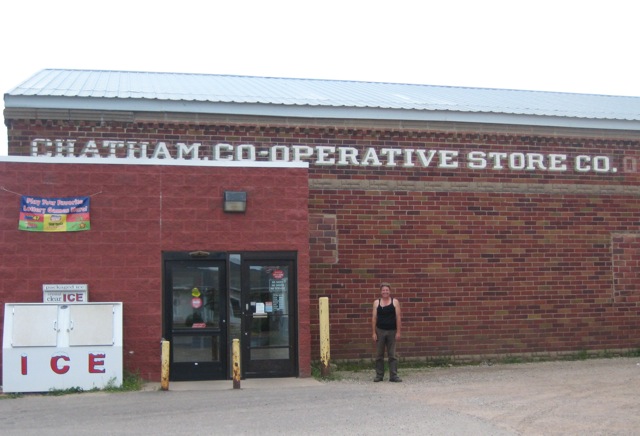
Moving on, we needed some snack foods and stopped in Chatham, a very tiny town.  We went to the only food store, a co-op that is owned by the town.  The employees of the store are actually employees of the town.  We imagine that Chatham lost its only food store at some point and the town figured that without being able to offer essentials to people they would lose all.  So they stepped up and created a co-op.  We talked some to the people there but wish we had learned more.  I returned to bring the little bouquet I made earlier and they seemed to really appreciate it.  It was a very nice small town and this store is likely its heartbeat.


We drove on with no agenda but to put on some miles.  After a few hours, near the shore of Lake Michigan, we stopped at a roadside rest stop.  Classic blue Rest Area sign announced it.  We went in, walked on a boardwalk through a few yards of wooded area and came upon a spectacular beach.  We put our feet in the water quickly so we could say we did and went to leave.   Just before we got in the truck to go we decided that we just had to swim, that we would regret it all day if we did not.  The water was shallow and clean and clear.  The sand was soft and ripply.  We could walk out quite far before getting in deep enough to swim.  This beach is located at the northenmost part of Lake Michigan.  The whole stretch along the Upper Peninsula was surprisingly untacky.  It was mostly protected National or State forests.   No condos or highrises.  The beach is public and easily accessible all along the length of the Peninsula.  It was quite nice.

On the way to the beach

We left the UP (as the Upper Peninsula is called) and went over the famous Mackinack Bridge.  


After that is was a straight shot down the center of the state on the interstate.  We are at that point where we need to make tracks.  I'll leave you with a picture of fireweed, a quintessential Michigan wildflower.  You see stands of it all over upstate.